
Monitoring and Evaluation (M&E) software systems drive informed decision-making in development, government, and corporate sectors. In Uganda, demand for robust monitoring and evaluation (M&E) frameworks has grown steadily since 2010.
Donor agencies, NGOs, and public institutions rely on structured M&E software and tools to track outcomes, assess effectiveness, and comply with national accountability policies like the National M&E Policy of 2013.
Besides funding audits, these systems enable real-time visibility into project performance across Uganda’s 134 districts. Efficient M&E enhances transparency and resource allocation.
Moreover, Uganda Vision 2040 and NDPIII prioritise data-driven governance. This creates opportunities for technology-led innovations in monitoring across agriculture, education, and health sectors.
Additionally, digital M&E tools enable multi-level data collection, integrating national KPIs with field-level evidence. This supports performance-based budgeting and long-term planning.
The country’s digital transformation agenda, spearheaded by the National ICT Policy 2014, continues to open pathways for specialised software solutions in the M&E software ecosystem.
If your organisation manages results-based initiatives, understanding Uganda’s evolving M&E landscape is essential for both compliance and operational impact.
Why Choose Othware Uganda for M&E Software Development?
Othware Uganda has delivered enterprise-grade software solutions since 2016, with a sharp focus on data-intensive systems that align with sector-specific performance frameworks.
In addition to software engineering, our team integrates domain expertise from public health, agriculture, and humanitarian fields to meet compliance with global M&E software standards like OECD-DAC.
Besides designing platforms from the ground up, we customise existing systems using Python, Laravel, PostgreSQL, and React for institutions requiring modular or scalable enhancements.
We offer full-cycle development: from requirements mapping and data model design to user training and post-deployment support, minimising external dependencies.
Moreover, Othware developers operate out of Kampala, ensuring fast project cycles and immediate field support across Uganda and the East African region.
We adhere to global project management standards, including ISO/IEC 12207 and PRINCE2, which ensure measurable output, traceability, and governance in every development phase.
If your organisation requires an M&E tool purpose-built for Uganda’s operating environment, Othware provides expertise backed by structured methodology and regional experience.
Core Features of Our M&E Software Solutions
Othware Uganda’s M&E software systems deliver mission-critical tools for data governance, program oversight, and reporting. Our platforms meet the complex requirements of development, donors, and public institutions.
Each solution is structured to enhance traceability, enable layered analytics, and support Uganda’s strategic data needs under Vision 2040 and NDPIII performance tracking.
Besides feature robustness, our systems are engineered for long-term reliability and compliance with local and international M&E guidelines.
Real-Time Data Collection and Field Synchronisation
Our applications use Android-based tools and ODK-compliant forms to capture field data. Sync functions support 2G to 5G networks and satellite uplinks in remote districts.
Custom validation rules ensure accuracy during input, while background encryption protects form submissions during transmission and storage.
In addition, offline-first architecture keeps data secure and retrievable until connectivity resumes. This ensures continuity even in environments with unreliable signal strength.
Customizable Dashboards and Analytics
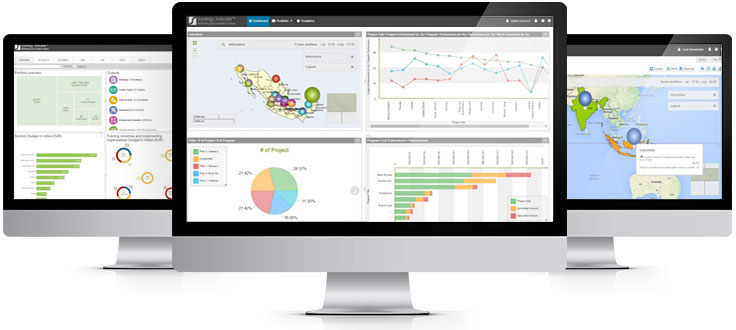
We build role-specific dashboards using React, Chart.js, and D3.js. These visual layers support multi-program performance analysis across KPIs, activities, and regional targets.
Data filters allow managers to isolate variances, trends, and bottlenecks. Besides visual summaries, users can export reports in Excel, PDF, or JSON formats.
Moreover, these dashboards align with Uganda’s M&E standards under the Office of the Prime Minister’s Results Framework.
Integration with Legacy Systems and Mobile Tools
We integrate with DHIS2, KoboToolbox, Power BI, and Salesforce. Our APIs support RESTful architecture for real-time data exchange with financial, HR, or inventory platforms.
On top of that, mobile apps enable GPS tagging, media uploads, and biometric verification for use in health outreach, education mapping, and agricultural surveys.
This eliminates the need for multiple disconnected tools across departments.
Role-Based Access Control and Security Protocols
User permissions follow RBAC principles and can integrate with LDAP or Microsoft Active Directory. Admins control who sees, edits, or exports each data layer.
Each action is logged and timestamped. Moreover, data is encrypted at rest using AES-256 and in transit via TLS 1.3.
We maintain compliance with Uganda’s Data Protection and Privacy Act 2019, along with GDPR for cross-border donor partnerships.
If your organisation handles sensitive or large-scale program data, our solutions provide granular controls and end-to-end security to manage information responsibly.
Our Development Approach
At Othware Uganda, we use a structured, six-stage approach for every Monitoring and Evaluation software project. This ensures technical soundness, client alignment, and regulatory conformity.
Each stage follows documented timelines, project tracking tools, and deliverables reviewed against predefined success criteria. We apply ISO 9001 and ISO/IEC 27001 principles throughout.
I. Requirements Gathering and Sector Analysis
We begin with detailed consultations involving M&E officers, data teams, and program leads. Our analysts review logframes, reporting schedules, and indicator definitions for each organisation.
In addition, we evaluate existing tools, internal reporting chains, and field-level data flow. This step shapes the system’s architecture and information logic.
II. Technical Specifications and Wireframe Design
Our engineers translate user requirements into technical blueprints, data schemas, and flow diagrams. Besides system logic, we define APIs, user roles, and access rules.
Wireframes visualise all screens for early feedback. You will validate layouts before we begin development to avoid change requests later.
III. Agile Development and Milestone Releases
We code in iterative sprints using Laravel, React, PostgreSQL, and Docker. Each sprint lasts two weeks and ends with a deployable build on a staging server.
Moreover, clients review and test functionalities continuously to ensure early alignment. Feature tickets are tracked using Jira or Redmine, depending on client preference.
IV. Field Testing and Quality Assurance
Before rollout, we test systems using live data, realistic user scenarios, and device combinations. Tests cover performance, accuracy, security, and mobile responsiveness.
Besides scripted test cases, we include exploratory testing to capture user feedback. Each critical issue is resolved before advancing.
V. Training and Documentation
We provide role-specific training to M&E officers, data clerks, and system administrators. In addition, we deliver manuals in PDF and HTML formats for local hosting.
Workshops are held in Kampala or on-site. Moreover, recorded sessions ensure future staff onboarding remains consistent.
VI. Deployment and Post-Go-Live Support
The system is deployed on secure servers with automated backup protocols. Clients receive three months of active support with ticketing, patching, and user inquiries.
On top of that, we conduct post-deployment reviews at 30, 60, and 90 days to track adoption and performance metrics.
Compliance and Data Security Standards
Othware Uganda adheres strictly to Uganda’s Data Protection and Privacy Act 2019 in every M&E software deployment. All data-handling procedures meet both legal and operational mandates.
We implement AES-256 encryption for data at rest and TLS 1.3 for all data in transit across mobile and desktop systems. Moreover, we enforce two-factor authentication for system access and offer biometric verification options for field tools.
Our hosting environments follow ISO/IEC 27001 guidelines. We use virtual private clouds with isolated networks, firewalls, and strict user access logs that cannot be altered manually.
In addition, we deploy automated backup solutions with 30-day retention cycles. These backups are stored in separate geographic locations within Uganda to support disaster recovery.
We conduct internal audits quarterly and make audit trails visible to administrators with tamper-proof logs. Every action in the system is timestamped and assigned to a verified user ID.
On top of that, our development process includes routine penetration testing using OWASP Top 10 protocols. We patch vulnerabilities immediately following CVE disclosures or vendor updates.
All clients receive a data management policy aligned with their sector’s compliance obligations. These include GDPR, where applicable for cross-border donor systems or EU partnerships.
If your program involves sensitive beneficiary information or financial oversight, our compliance model ensures both protection and auditability at every stage of system use.
Get Started with Othware Uganda
Engaging Othware Uganda for your M&E software project begins with structured onboarding and guided discovery. Our team ensures every engagement is purposeful, timely, and aligned with your organisation’s needs.
Whether you are replacing spreadsheets or scaling donor reporting, our process integrates sector knowledge with deep software engineering proficiency.
Step I: Initial Consultation and Problem Scoping
We begin with a 30 minutes or one-hour virtual or in-person session. You outline operational pain points, compliance needs, and target outcomes. We ask domain-specific diagnostic questions.
In addition, we review existing tools, reporting timelines, stakeholder maps, and internal IT infrastructure to frame the technical solution scope.
Step II: Solution Design Proposal
Within five business days, our team delivers a design brief. It includes system architecture, tech stack, user roles, compliance references, and project duration.
We also provide pricing tiers, hosting options, and optional services such as API integration, analytics modules, or mobile app deployment.
Step III: Service Agreement and Kick-Off
Once approved, we issue a signed work contract under Ugandan ICT service regulations. Kick-off involves detailed timelines, team introductions, and project tools setup.
Moreover, we assign a dedicated project manager and technical lead who remain available throughout development, deployment, and post-launch support.
Step IV: Development, Delivery, and Support
Our team codes, tests, and deploys the system based on the agreed roadmap. Weekly progress reports keep you informed on feature completion and upcoming tasks.
Besides delivery, we offer 90 days of complimentary support for issue resolution, performance monitoring, and post-launch optimisation.
If your organisation is ready to improve M&E efficiency, contact Othware Uganda through our web form, phone line, or direct email to schedule your consultation.
Frequently Asked Questions (FAQs)
What sectors does your M&E software support?
We support government ministries, NGOs, donor agencies, and the private sector. Each system is built to reflect sector-specific workflows and reporting structures.
How long does it take to develop a system?
A standard project takes 8 to 12 weeks. This includes planning, coding, field testing, training, and deployment under structured project milestones.
What platforms do you use to build the software?
We use Laravel, React, PostgreSQL, Python, and Docker. In addition, we deploy mobile features using Java for Android or Flutter if cross-platform is required.
Can your systems integrate with DHIS2 or KoboToolbox?
Yes. Our API connectors allow bidirectional data sync with DHIS2, KoboToolbox, ODK, Power BI, and other sector-specific platforms.
Do you provide hosting and backups?
Yes. We offer cloud-based hosting on AWS or private VPS, along with daily encrypted backups stored in redundant secure zones.
What security measures are in place?
We use AES-256 encryption, TLS 1.3 for transmission, RBAC, 2FA, and audit logging. All systems comply with Uganda’s Data Protection and Privacy Act.
What happens after deployment?
Clients receive 90 days of direct support. We handle bug fixes, updates, and user assistance, and provide options for annual support contracts.
How do we start the process?
Contact us via phone, email, or our website form. We will schedule a discovery session to understand your needs and recommend a solution.
At your Service
Othware Uganda is ready to support your next project with efficient, secure, and scalable software solutions. Our team operates with clarity, speed, and commitment to delivery.
We work with institutions that require results-focused systems and dependable technical partnerships. Every engagement starts with a consultation and ends with a system that works.
Get in touch today to define your requirements, ask technical questions, or receive a quote. We respond to all inquiries within one business day.
Use our website contact form, call us directly, or send an email to initiate your engagement. Let us help you advance your monitoring infrastructure.